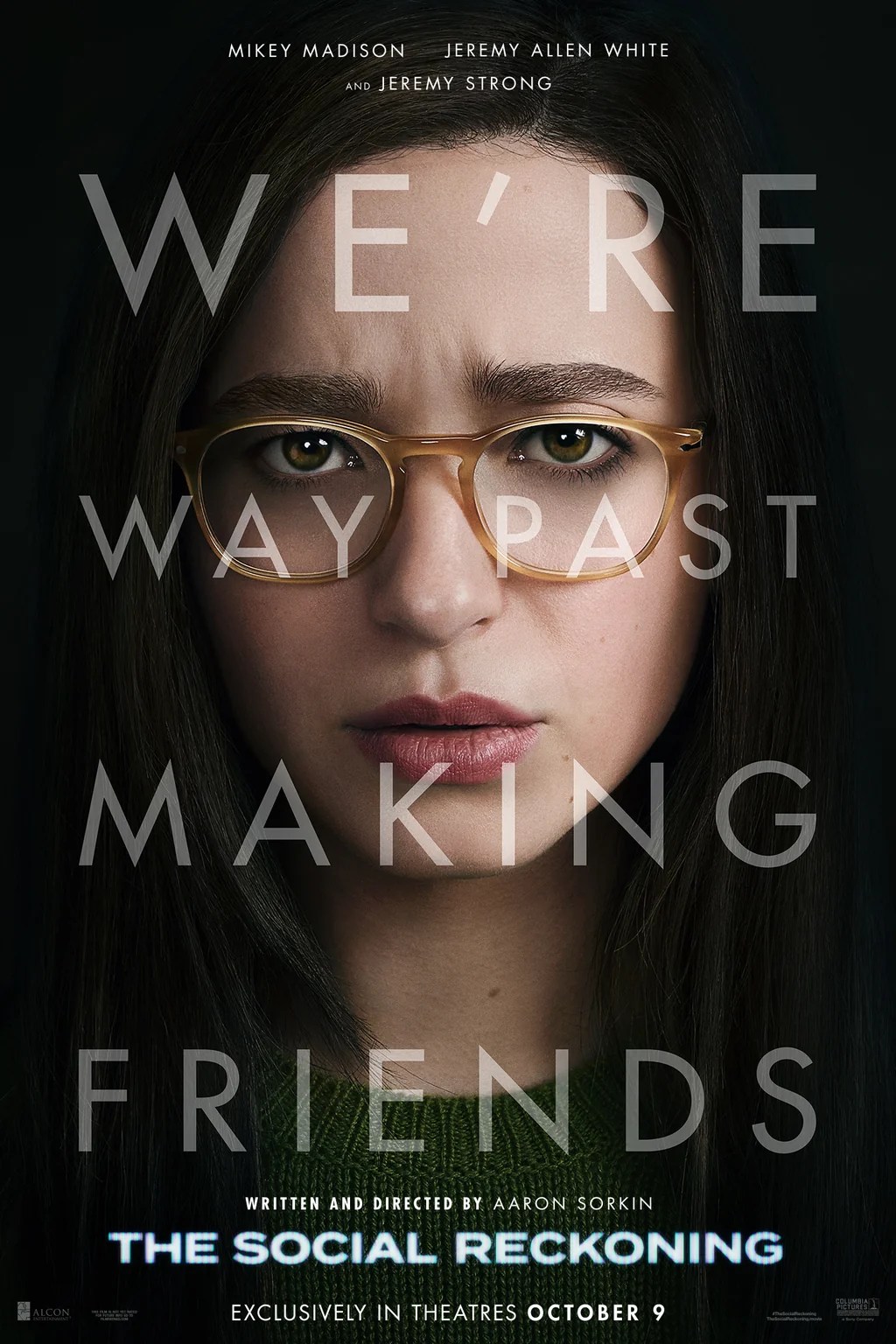
The Social Reckoning

Is Facebook evil? Well, yes and no.

It connects people. It informs people. You may have, in fact, clicked on a link posted on Facebook to find this review of the new movie The Social Reckoning. But Facebook is guilty of many sins, several of which are explored in this film.

Its leader Mark Zuckerberg (Jeremy Strong) is portrayed in The Social Reckoning as a hard-nosed strongman whose mission is to grow Facebook’s user numbers and its stock price. 

Aaron Sorkin, who wrote the script and directed the movie, shows Zuckerberg’s boardroom meetings in stark black-and-white. The most telling scenes of Zuck’s ego and insecurity come when he is being prepped for testimony before congressional committees. During that media training, Zuckerberg is peppered with advice from early Facebook investor Charlie Garrigan (Bill Burr) but pushes back against that input.

Wall Street Journal reporter Jeff Horwitz (Jeremy Allen White) arrives in San Francisco to investigate what’s going on at Facebook. He messages numerous employees via LinkedIn and gets one response, from Frances Haugen (Mikey Madison).

She believes in Facebook as a force for good, for connecting people. But she sees the dark side, too, and begins sharing information with Horwitz. She even chooses to move beyond being an anonymous source to being identified as a whistleblower.

Zuckerberg regards Facebook as a vessel for content though not the generator of that content. He calls the platform a “corkboard.” But Haugen’s inside info shows that Facebook controls who sees what. And that leads to Trump and the January 6 riot at the U.S. Capitol building. Clips depicting that event are included in the film.

Two big differences between this film and 2010’s The Social Network:

The earlier film shows Zuckerberg (played by Jessie Eisenberg) as an energetic young college student, maneuvering to seize control of the emerging platform. The new film shows him as a more settled adult. Also, in 2010 Facebook was still new and fresh, unknown to many and less known than now even to heavy users. Today Facebook and its sibling Instagram are part of popular culture, accessed daily by a large portion of the world’s population. (Sorkin wrote the screenplay for the the 2010 film which was directed by David Fincher.) 

The Social Reckoning is the sort of movie that, considering its story, could just crawl but it moves along at a good, tight pace, clocking in at just under two hours. There are a few humorous throwaway lines which are worth a few chuckles. Curiously, Madison who played a sex worker in the film Anora, shows up for some of her meetings with Horwitz in provocative attire—Sorkin’s attempt to add a bit of allure to her character?

Unlike with the buzzy at the time 2010 Facebook movie, there may be less urgency to see The Social Reckoning. Not that it is flawed but because much of its tale has been told already. The Social Reckoning is rated R.
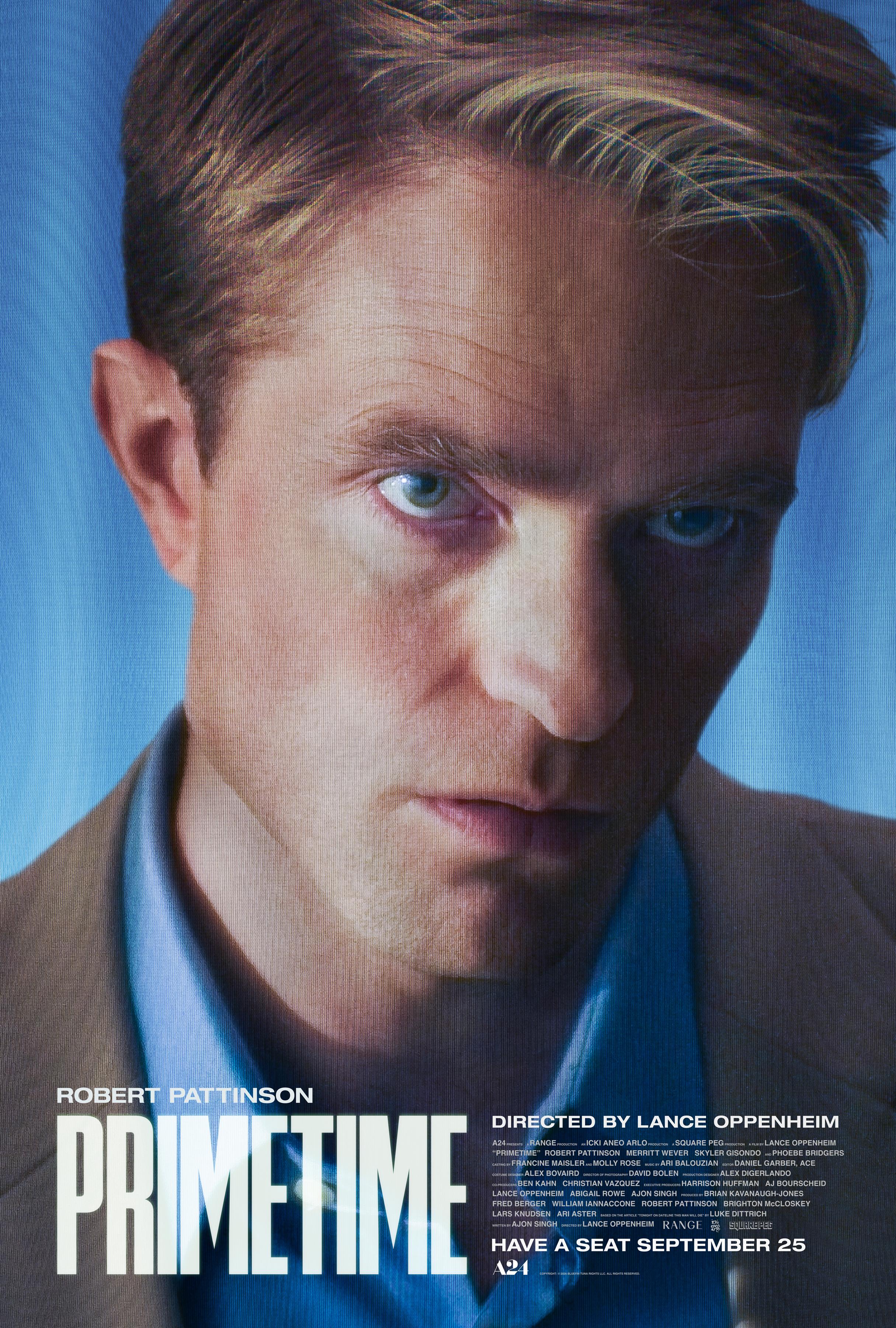
Primetime

Another bravura performance from Robert Pattinson! If you’re a Pattinson fan, here’s one more example for you of his talent and his range as an actor.

Primetime is a behind-the-scenes look at Chris Hansen (Pattinson) and NBC-TV’s To Catch A Predator. Hansen has a healthy ego. He is hungry for TV ratings. And confronting would-be sex offenders on camera turns out to be ratings gold. 

NBC programming chief Jeff Zucker (played by… Jeff Zucker!) makes it clear that he finds Hansen’s show distasteful but that since his work attracts viewers, the show it is about to get a primetime time slot opposite Lost.

A key to Hansen’s efforts comes from his support team and from the decoys he employs to lure the men when they physically show up for sexual favors. Producer Andie (Merritt Wever) and keyboard guru Xavier (Matthew Maher) try to keep the show and Hansen under control. Del (Phoebe Bridgers) and “Decoy Dan” (Skyler Gisando) are bait for the pervs. These four actors bring commendable performances to their roles.

The tale is full of conflicted people. Hansen assumes high moral ground with his “gotchas” but is cheating on his wife. The organization that launched TCAP wants to stop predators but sells thongs on its website. Dan has qualms about what he’s doing but keeps at it to get TV credits and, ultimately, his union card. Andie is loyal to Hansen but ponders a job offer from ABC-TV.

Director Lance Oppenheim adds stylish touches to the film without overwhelming it. Hansen has a reddish tone to his face through much of the film. Lighting effects add an air of mystery to the later scenes of the movie. Parts of the film have the feel of a documentary. (Oppenheim’s prior works have been docs.) TV camera perspectives and hand-held camera shots add energy to what would otherwise be static scenes. 

The script is by Ajon Singh based on an Esquire magazine article about the TV show and Hansen. Rooted in true events, the film has dramatic embellishment. Not that that’s a bad thing.

As Zucker tells Hansen in the film, TV was changing in the early part of this century. Spending less money on “reality” TV shows not only makes economic sense but also brings plenty of viewers to the various networks. If To Catch A Predator seemed sleazy or sordid back in the day, compare it to what’s on your television as you flip through cable channels tonight (or to what’s on certain true crime podcasts) and maybe reconsider your appraisal.

Primetime is rated R for various sexually related elements and one scene of graphic male nudity.

Tony

A 19-year-old college student spends his summer break in a strange town far away from his school and his family home. He sees and hears new things, has new experiences. The summer for the young man is… LIFE CHANGING!

That’s MY story. That summer happened for me when I was 19. 

And it happened to Anthony Bourdain when he was 19. The new movie Tony is his story. To a small degree, I can relate.

In his 2000 book Kitchen Confidential, Anthony Bourdain writes about his culinary experiences, starting with the summer he spent in the resort town of Provincetown, Massachusetts working in a restaurant. This film is fictional, based on (inspired by? Adapted from? What’s the legal term here?) Bourdain’s recollections he shares in the book. 

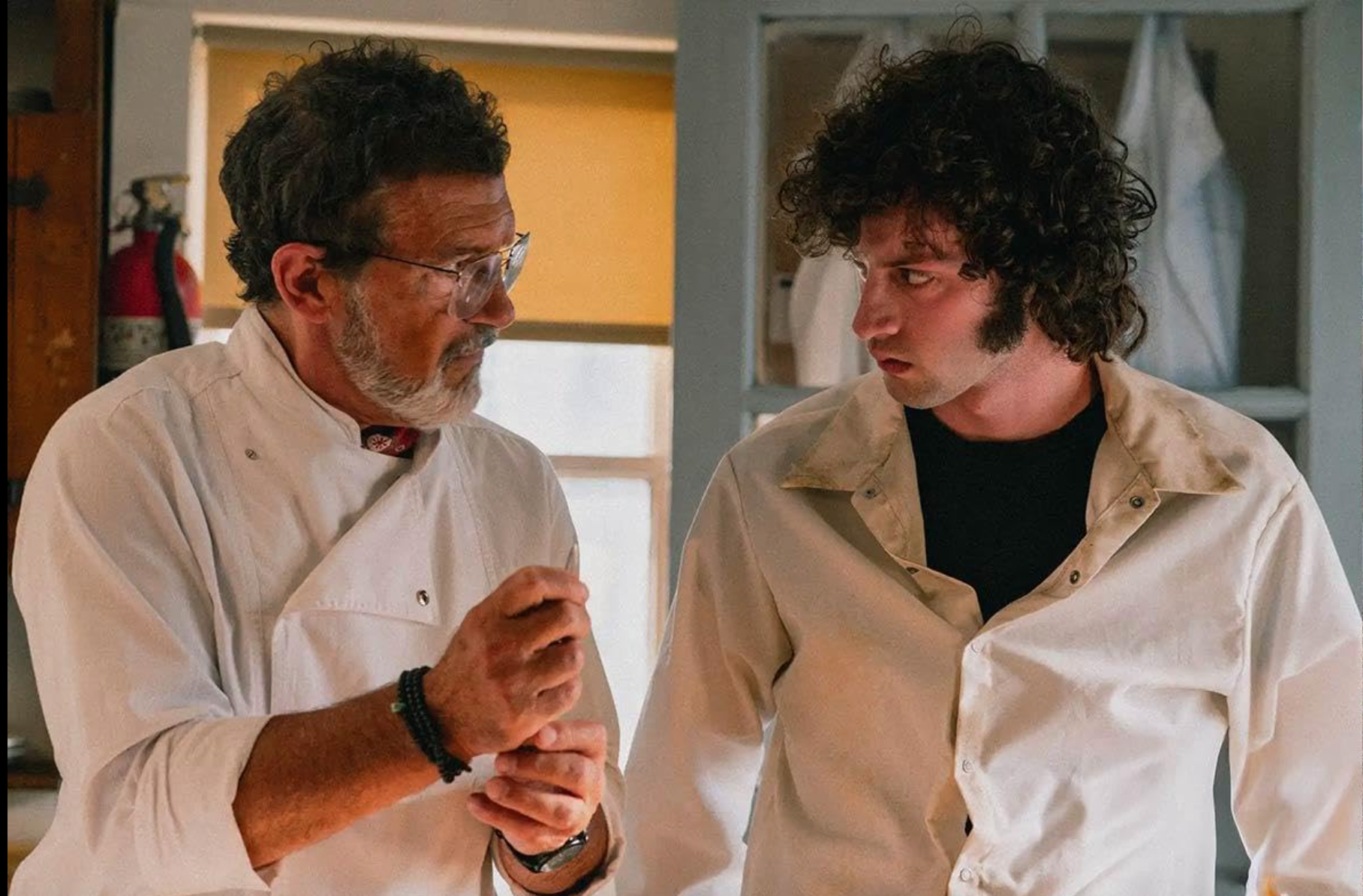
Tony (Dominic Sessa) takes a bus to Cape Cod mainly because Nancy (Emilia Jones), a girl he likes, tells him she’s spending her summer there. Sessa, who was excellent in his rookie outing in The Holdovers, is convincing as the smart ass who keeps telling people he’s a writer. His first restaurant gig is washing dishes. Meanwhile, his pursuit of the girl moves along slowly.

Here are the real Anthony Bourdain’s words that appear on screen at the beginning of the film: “I was—to be frank—a spoiled, miserable, narcissistic, self-destructive and thoughtless young lout, badly in need of a good ass-kicking.”

Sessa is good. He looks a bit like Bourdain, tall and lanky. But it’s the supporting cast that makes this movie better. 

The restaurant owner (Antonio Banderas) provides Tony with a gig and a place to stay. But it’s his guidance and tolerance in the kitchen that makes this fictional portrayal so appealing. When it’s time to hand out awards in a few months, Banderas should be in the mix.

Kitchen crew mate Sal (Leo Woodall) turns young Tony on to various vices including cocaine. Sal is a lady killer who, when a wedding party celebrates at the restaurant, has his way with the bride.

Tony, the movie, and Sessa, the actor, demonstrate palpable changes in the young future media giant. Does a person grow up that much over one summer? As noted, this is a fictional depiction and there’s been embellishment. Then again, was Bourdain’s book, the source material,  fact-checked? Should we take his words in the book at face value? Hmmm.

For Tony Bourdain, at the start of the summer he turns 19, he wanted to be a writer. At the end of his summer, he wanted to pursue a culinary career. He learned a lot about the industry and about himself. Of course he had a restaurant career and then went on to hone his talent as a writer years later.

Tony is one of my favorite movies of the year. And not just because it has led me to recall a similar summer in my life. It has an enjoyable story and an overall good vibe, not to mention a few big laughs.

Tony is directed by Matt Johnson who is a co-writer of the script with three others. Tony is rated R.