A 19-year-old college student spends his summer break in a strange town far away from his school and his family home. He sees and hears new things, has new experiences. The summer for the young man is… LIFE CHANGING!
That’s MY story. That summer happened for me when I was 19.
And it happened to Anthony Bourdain when he was 19. The new movie Tony is his story. To a small degree, I can relate.
In his 2000 book Kitchen Confidential, Anthony Bourdain writes about his culinary experiences, starting with the summer he spent in the resort town of Provincetown, Massachusetts working in a restaurant. This film is fictional, based on (inspired by? Adapted from? What’s the legal term here?) Bourdain’s recollections he shares in the book.
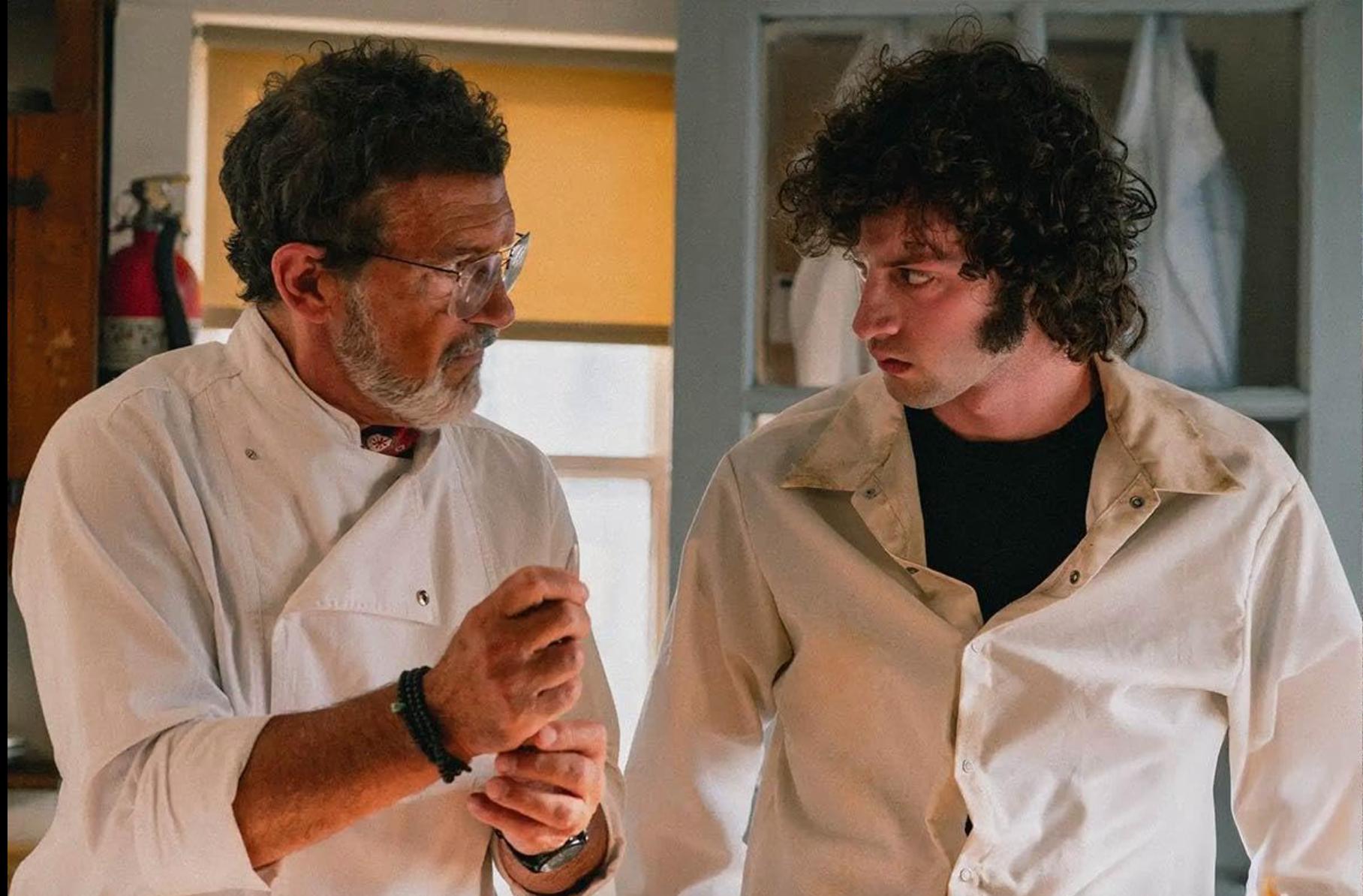
Tony (Dominic Sessa) takes a bus to Cape Cod mainly because Nancy (Emilia Jones), a girl he likes, tells him she’s spending her summer there. Sessa, who was excellent in his rookie outing in The Holdovers, is convincing as the smart ass who keeps telling people he’s a writer. His first restaurant gig is washing dishes. Meanwhile, his pursuit of the girl moves along slowly.
Here are the real Anthony Bourdain’s words that appear on screen at the beginning of the film: “I was—to be frank—a spoiled, miserable, narcissistic, self-destructive and thoughtless young lout, badly in need of a good ass-kicking.”
Sessa is good. He looks a bit like Bourdain, tall and lanky. But it’s the supporting cast that makes this movie better.
The restaurant owner (Antonio Banderas) provides Tony with a gig and a place to stay. But it’s his guidance and tolerance in the kitchen that makes this fictional portrayal so appealing. When it’s time to hand out awards in a few months, Banderas should be in the mix.
Kitchen crew mate Sal (Leo Woodall) turns young Tony on to various vices including cocaine. Sal is a lady killer who, when a wedding party celebrates at the restaurant, has his way with the bride.
Tony, the movie, and Sessa, the actor, demonstrate palpable changes in the young future media giant. Does a person grow up that much over one summer? As noted, this is a fictional depiction and there’s been embellishment. Then again, was Bourdain’s book, the source material, fact-checked? Should we take his words in the book at face value? Hmmm.
For Tony Bourdain, at the start of the summer he turns 19, he wanted to be a writer. At the end of his summer, he wanted to pursue a culinary career. He learned a lot about the industry and about himself. Of course he had a restaurant career and then went on to hone his talent as a writer years later.
Tony is one of my favorite movies of the year. And not just because it has led me to recall a similar summer in my life. It has an enjoyable story and an overall good vibe, not to mention a few big laughs.
Tony is directed by Matt Johnson who is a co-writer of the script with three others. Tony is rated R.

