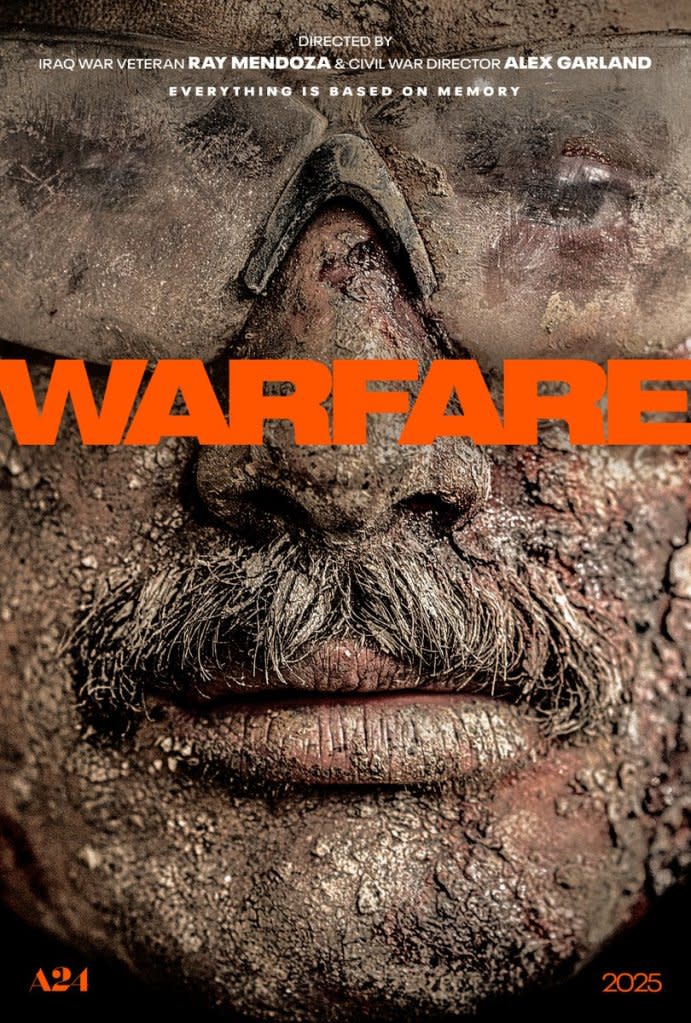
Warfare

IF YOU LIKE WAR MOVIES… you might enjoy Warfare.

IF YOU WERE OKAY WITH THE REALISTIC GORE OF SAVING PRIVATE RYAN… you might enjoy Warfare.

IF YOU APPROVE OF AMERICA’S INVOLVEMENT IN IRAQ IN THIS CENTURY… you might enjoy Warfare.

The true events depicted in Warfare occurred on November 19, 2006. American Navy seals were sent into a neighborhood of Ramadi, Iraq to quell an assemblage of jihadists. They took over a residence. They engaged the enemy. 

A missle hit resulted in injuries to troops who were outside the residence. Efforts were made to address those grisly wounds. A pair of tanks were dispatched to ferry the troops out of the danger zone.

Did this action have a significant effect on the U.S, war effort in Iraq? Hard to say. As one of the Iraqi family members whose home was taken over by the Americans pleads near the movie’s end, “Why?” 

The moviemaking craft employed here is laudable. Despite being filmed primarily in Britain, the moviemakers (co-directors/writers Alex Garland and Ray Mendoza) do a superb job of recreating the Iraqi home and its environs. Aerial surveillance images add to the storytelling of the mission.

Warfare shows the teamwork and commitment these men—real life individuals—put into the U.S. military efforts in Iraq. Only a few of these men have their real names and photos shown in the film’s end credits—most are given aliases and their faces are blurred.

Warfare is intense. Not an easy film to watch. Once was enough for me. Rated R.

Lone Survivor

Spoiler Alert! The title of this movie is Lone Survivor.

Despite that big giveaway, Lone Survivor is a pretty good war movie. Set in 2005 in Afghanistan, the film is based on true events.

Four Navy SEALs are sent to check out a village where a Taliban leader is believed to be hiding out. The frogmen (who do this mission on dry land) are Luttrell (Mark Wahlberg), Murphy (Taylor Kitsch), Dietz (Emile Hirsch) and Axe (Ben Foster).

After being ‘coptered in and dropped off, they scoot across a mountaintop and begin to monitor the village below. Their communications gear fails and they cannot make contact with their base commander (Eric Bana).

So they wait. Suddenly, seemingly out of nowhere, up walks a group of locals with a herd of goats. They are unarmed. Do the SEALs kill them, tie them up or let them go on their way? Alas, they choose the last option, which soon leads to a confrontation with Taliban fighters.

The SEALs engage in a firefight that is fierce and brutal. The battle is on a hillside and the four Americans take some tough falls down the inclines. Being outnumbered by a large margin, all except Luttrell are eventually taken down. With help from a group of locals who are anti-Taliban he makes it out alive.

Lone Survivor is not a political film. It does not judge American involvement in the region. The men who fight are fighting for their county, yes, but also for one another.

I read Jon Krakauer’s excellent book Where Men Win Glory: The Odyssey of Pat Tillman last year. It described a mission in Afghanistan with bad planning, communication snafus and clumsy execution not unlike this one. The two tales do not inspire great faith in our military.

They do, however, generate appreciation for the men who fight. Stick around for the sequence at the end of the film which offers a salute to the real life fighting men.