Marty Supreme

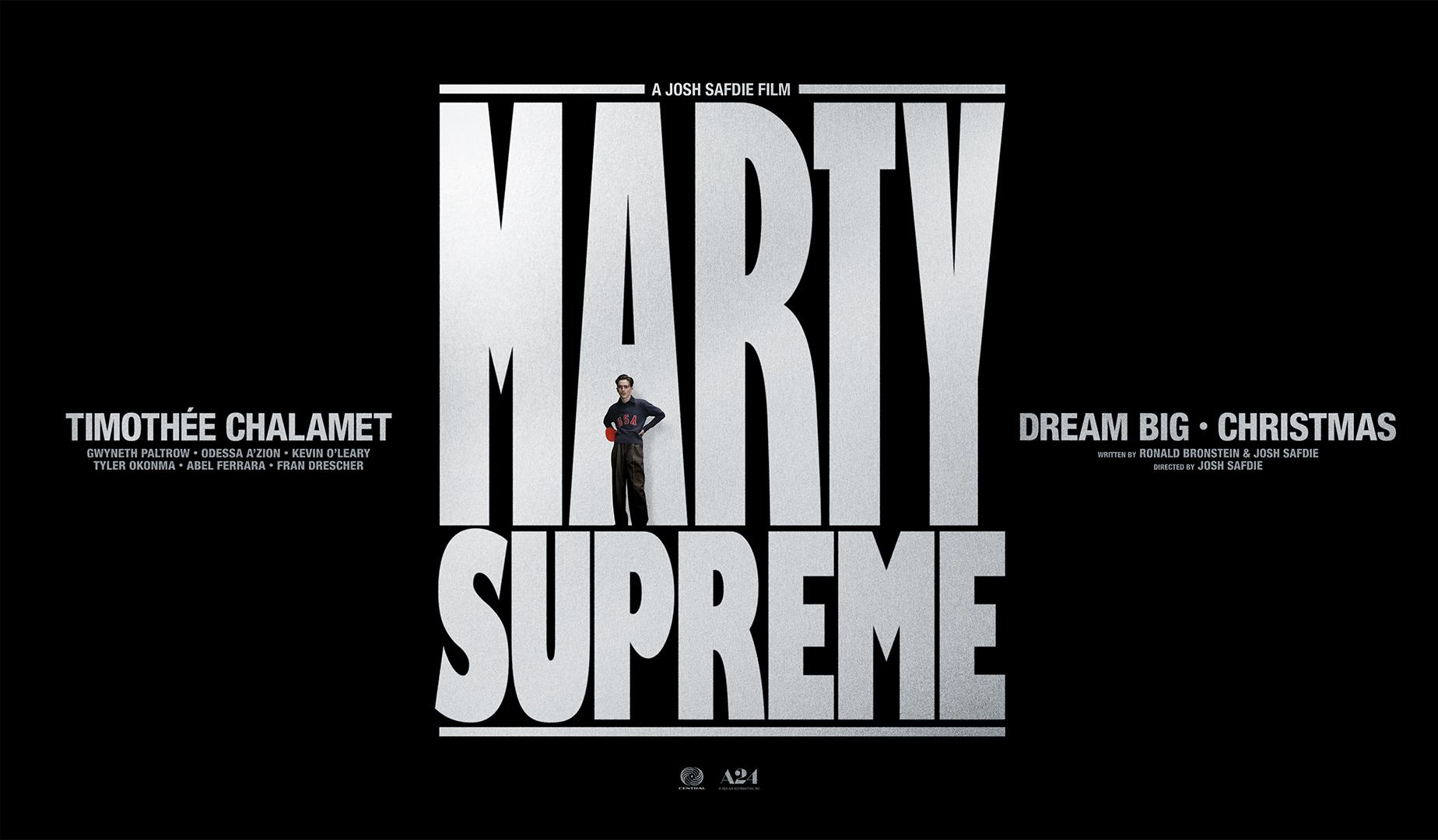
What a character! Marty Mauser (Timothée Chalamet) AKA Marty Supreme is one of the more memorable rare birds seen onscreen in a long time. He’s an over-confident table tennis hustler, a schemer and a romancer. And a shoe salesman!

He’s based on a real life person but the Marty created by co-writer and director Josh Safdie and fleshed out by Chalamet is an over-the-top can’t-be-real guy who’s full of surprises and seemingly fearless moves and feints. Somehow all his ventures seem to work out.

And the characters he encounters during the time of the movie—a year or so in the early 1950s—are a clever mix of individuals. Rachel (Odessa A’zion) is a neighborhood girl friend who engages in a tryst with Marty in the back room of the shoe store where he works and becomes pregnant. Kay Stone (Gwyneth Paltrow) is a sort of washed up actress who Marty spots and seduces. Her husband Milton Rockwell (Kevin O’Leary of Shark Tank fame), is a crusty businessman who Marty hits on for financial sponsorship. Marty’s mom is played by Fran Drescher and magician Penn Gillette has a memorable role as an angry dog owner.

Marty Supreme moves at a breakneck pace. The tale and the lead character are audacious and frequently funny. It’s not quite Tarantino level but there’s a collection of episodes here that seem to whipsaw in unexpected directions.

And what about the table tennis? Just like he practiced guitar to play Bob Dylan, Timothée Chalamet practiced for years to become a ping-ping wizard. Not that the sports competition is the main reason to see Marty Supreme, but the ping-pong play is a vital element. And director Safdie includes just about the right amount. Will Marty Supreme lead to a boom in sales of ping-pong tables? It could happen!

Chalamet, who turns 30 on December 27, is likely to receive his third Academy Awards nomination for his portrayal of this beguiling character. Will he grab the trophy this time? It could happen!

For pure entertainment and engagement, Marty Supreme is a winner. One of this year’s best.

Marty Supreme is rated R for language, sexual content and violence. It runs two-and-a-half hours.

Bio Movies: Dramatic vs Documentary

When presenting a story about a famous person on film, which is better: a scripted dramatic film starring professional actors or a documentary film featuring actual footage of the person with comments from friends, family and other associates?

This question comes to mind after seeing films during the last year about Freddie Mercury, David Crosby, Miles Davis, Linda Ronstadt and Judy Garland. Also, the Ken Burns PBS series about country music caused me to recall dramatic movies about Loretta Lynn, Patsy Cline and Johnny Cash, among others.

My examples listed here are music stars but the question also applies also to films about well-known individuals in other walks of life. It’s my belief that each style (dramatic or documentary) has its own virtues.

In a dramatic telling of a person’s life story or, as with the Judy Garland movie, a brief period of a person’s life, the filmmaker has the opportunity to massage the facts to present a coherent narrative with elements of conflict, romance and the ups and downs of life. Timelines can be condensed or expanded. Events that may have seemed inconsequential at the time can be presented as key turning points.

In a documentary film, the filmmaker also has the ability to shape the content that makes it to the screen, but he or she is working with actual events and real people. Is a documentary biographical film the complete and unvarnished truth? No. It is a version of the truth. But with archival footage and present day commentary, it has a level of authenticity. The best documentaries, I believe, have a point of view and may not present all sides of a story.

A successful biography type film, be it dramatic or doc, adds to our understanding of an individual and our appreciation for that person’s challenges and accomplishments.

Of course, a key consideration is money. Production costs for Bohemian Rhapsody are estimated on imdb.com at $52 million. The film’s worldwide gross is nearly one billion dollars. Documentary costs or revenues are never anywhere close to those numbers. For that reason, producers may be more quickly willing to risk an investment on a documentary about a person such as Linda Ronstadt whereas a dramatic telling of her life/career story would be a much riskier proposition.

With both styles of storytelling, there will always be complaints that a real life event was depicted incorrectly or that certain events or people are totally omitted. But, hey, you can’t please everybody.